


🩸 When Your Hair Falls Out; Don’t Worry, There’s a Solution!

#To be honest, seeing more hair in your comb every day or scattered across your pillow is one of those experiences that can be really frustrating. It feels like a piece of your self-confidence is gradually diminishing. Well, Kian Derm, a name you’ve probably heard, knows a lot of ways and means, especially for skin and hair problems, in situations like these. One of these promising solutions is “PRP hair loss treatment,” which has been making a lot of noise lately.
Let’s take a moment to think: why does our hair start falling out? Well, the reasons are numerous; from genetics to stress, poor nutrition, hormonal changes, and even certain illnesses. Each of these can combine to thin out those delicate strands, or worse, cause the hair root to weaken and die. Then you’re left wondering what to do?
This is where advanced medical treatments come into play. Previously, options might have been more limited, but now, with scientific advancements, methods like PRP (Platelet-Rich Plasma) have emerged as a beacon of hope for those seeking a natural and effective solution. PRP is actually derived from your own blood, meaning it’s something entirely from your own body that’s going to help you. Interesting, isn’t it?
We’ve written this guide to introduce you step-by-step to this treatment method. From what PRP is and how it works, to who is a suitable candidate, and what happens after the treatment. We want to tell you everything transparently, like a close friend sharing all the information with you. Because choosing the right treatment for hair loss is an important and personal decision. So let’s go see what PRP has up its sleeve!
🔬 What Exactly is PRP? A Scientific Look at This Magical Fluid
Alright, let’s get more precise and see what this much-talked-about PRP actually is and how it works. PRP stands for “Platelet-Rich Plasma.” Now, what is plasma? It’s the liquid part of our blood that carries blood cells. And platelets? These are tiny cells in our blood whose job is to stop bleeding. That is, if you cut yourself, they quickly come to the rescue and form a clot. But the story doesn’t end there.
Platelets have another secret: they are full of “growth factors.” These growth factors are special proteins that send important signals to cells. For example, they can cause cells to divide, grow, or repair themselves. They’re exactly like a repair team that quickly arrives and starts reconstruction when a part of the body is damaged.
Now, in PRP hair loss treatment, we utilize this very property of platelets. How? First, they’ll draw a small amount of blood from you, just like a regular blood test. Then, this blood is placed in a device called a centrifuge. This device spins at a very high speed, causing different components of the blood to separate. This way, the platelet-rich plasma, which is full of those beneficial growth factors, is separated from the other blood components.
This golden-colored fluid we now have has a much higher concentration of platelets than normal blood. When we inject these concentrated platelets into areas of the scalp where hair is thinning or falling out, those growth factors begin to work. These factors signal the hair follicle cells to reactivate, strengthen hair roots, prolong the hair growth phase, and even stimulate new hair growth. In a way, it’s like giving an extra boost to tired hair follicles to revive them. All natural, all from your own body.
Dreaming of radiant, healthy skin free from imperfections and the visible signs of aging? kianderm transforms your skin goals into reality, providing a full spectrum of advanced medical dermatology and cutting-edge aesthetic treatments for a luminous complexion and renewed confidence!
✅ Expert diagnosis and effective treatment for a wide range of conditions
✅ Innovative cosmetic procedures including laser therapy and dermal fillers
✅ A dedicated team ensuring your utmost comfort and satisfaction throughout your care
Start your journey to beautiful skin with kianderm!
✅ Who is a Suitable Candidate for PRP Hair Loss Treatment?

Okay, now that we understand what PRP is and how it works, the important question is: Is this treatment suitable for me? Frankly, choosing PRP for hair loss treatment requires a thorough evaluation by a specialist. Not everyone experiencing hair loss is a suitable candidate for this method, and that’s normal. Every treatment has its limitations and specific conditions.
Generally, the best candidates for PRP hair loss treatment are those suffering from “androgenetic alopecia” or hereditary and hormonal hair loss. This type of hair loss is common in both men and women and usually manifests as gradual hair thinning, especially at the crown and temples (in men) or general hair thinning (in women). If the hair follicles are not completely destroyed yet and are only weakened, PRP can be very effective.
Also, individuals with mild to moderate patchy hair loss (alopecia areata) or those with generally thinned and weakened hair can benefit from this treatment. The main goal of PRP is to strengthen existing follicles, stimulate new hair growth, and increase the thickness of thinning hair.
However, there are also those who may not be suitable candidates. For example, if you have very severe and advanced hair loss where follicles are completely destroyed, or if you have specific blood disorders such as platelet deficiency, cancer, active infection in the injection area, or severe autoimmune diseases, PRP might not be suitable for you. Pregnant or breastfeeding women are also usually advised against this treatment.
Therefore, before making any decision, a comprehensive consultation with a dermatologist or hair specialist at a clinic like Kian Derm is essential. They will accurately assess your medical history and hair condition to determine whether PRP is the best option for you. Remember, proper diagnosis is half the battle.
| Condition | Suitable Candidate | Unsuitable Candidate |
|---|---|---|
| Type of Hair Loss | Androgenetic alopecia (hereditary), mild alopecia areata, hair thinning | Very severe hair loss with completely destroyed follicles |
| General Health | No blood disorders, active infection, or cancer | Severe blood disorders, active scalp infection, active cancer, pregnant/breastfeeding women |
| Expectations | Realistic about results and need for multiple sessions | Expectation of immediate magical results, unwillingness to follow up sessions |
💉 The PRP Treatment Process: From Blood Draw to Injection
Okay, if you’ve decided to start “PRP hair loss treatment,” you’re probably eager to know exactly what’s going to happen. The entire process is relatively simple, and most of it is done right there in the clinic under the supervision of a specialist doctor. Don’t worry, there’s nothing to be scared of; most of it resembles a routine medical procedure.
The first step, as its name suggests, is the “initial consultation.” This stage is incredibly important. The doctor at Kian Derm clinic will talk to you, examine your hair and scalp condition, ask about your medical history, and discuss your expectations for the treatment. This is your chance to ask all your questions and make sure this method is the best option for you.
After that, if everything is okay, it’s time for the “blood draw.” Yes, a small amount of blood will be taken from your arm, just like when you go for a blood test. The volume of blood taken is usually between 10 to 20 cc, so it’s not a lot and definitely not a cause for concern.
Now, this collected blood is transferred to a special tube and placed in a “centrifuge” machine. This stage is the “platelet enrichment” process. The centrifuge spins at high speed, using centrifugal force to separate the different components of the blood based on their weight and density. Finally, the plasma, rich in platelets and growth factors, is separated. This process usually takes about 10 to 15 minutes.
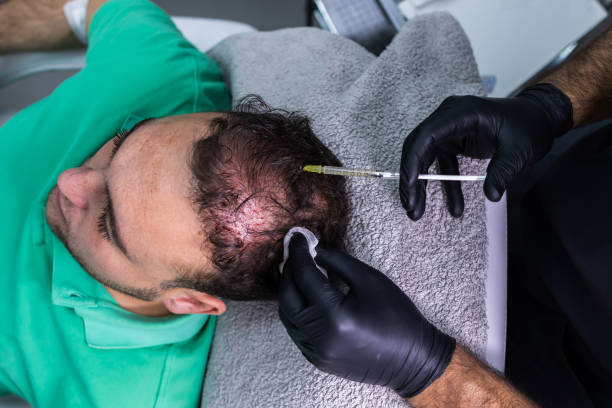
Once the PRP is ready, it’s time for the “injection.” The doctor will first numb the scalp area with a topical anesthetic so you feel minimal pain. Then, using very fine needles, the PRP is injected directly and in specific patterns into the desired areas of the scalp. These injections are performed at a specific depth in the skin to reach the hair follicles. The entire injection process usually takes about 15 to 30 minutes.
Typically, to see desired results, several treatment sessions are required. The number of sessions and the intervals between them depend on the type and severity of your hair loss, and of course, the doctor’s diagnosis. However, 3 to 6 sessions at 4 to 6-week intervals are often recommended. After that, maintenance sessions may be needed every few months to preserve the results. So, that’s the whole process from start to finish.
⏰ What Happens After PRP Sessions? Realistic Expectations
Okay, the injection is done. Now what? This is a question many people have in mind after PRP hair loss treatment. The truth is, immediately after the injection, no miraculous event will occur where your hair suddenly sprouts. This is a treatment that takes time and requires patience and follow-up.
During the injection, you might experience a mild stinging sensation or pressure, but since the area is numbed, it’s usually tolerable. After the injection, your scalp might be slightly red, swollen, or sensitive. These reactions are completely normal and usually subside within a few hours to a day or two at most. There’s no cause for concern. The doctor usually recommends avoiding washing your hair for 24 hours and refraining from strenuous physical activities, saunas, or steam baths. Wearing a hat and direct sun exposure should also be limited for a few days.
The important point is that you need to be patient to see results. The growth factors in the platelets start working, but the regeneration of hair follicles and the stimulation of new hair growth is a biological process that takes time. Typically, the first signs of improvement appear after 2 to 3 months from the start of treatment and completing a few sessions. For example, after the second or third session, you might notice that your hair loss has decreased, or your thin hair has become slightly thicker.
Peak results usually show themselves between 6 to 12 months after the last initial treatment session. During this time, you might see that your hair has become fuller, the thickness of your hair strands has increased, and new hairs might even start growing in thinning areas. Of course, these results vary from person to person and depend on factors such as the severity of hair loss, age, general health, and the body’s response to treatment. It’s important to have realistic expectations. PRP is a catalyst for your hair’s natural growth, not a magic trick that changes everything overnight.
Want to combat early signs of aging or prevent future damage? kianderm offers proactive aesthetic and medical treatments designed to maintain skin integrity and youthfulness over time.
✅ Preventative skincare strategies
✅ Long-term skin health solutions
✅ Expert guidance for anti-aging
Invest in your future skin with kianderm!
🌟 Advantages and Benefits of PRP for Your Hair
Okay, why should we even consider PRP hair loss treatment? What distinguishes this method from others? When we look at the benefits of PRP, we understand why it has garnered so much attention from specialists and patients alike. This method truly has a number of advantages that cannot be overlooked.
First and foremost, it’s the “naturalness” of this treatment. What does this mean? It means we use your own blood for your own treatment! This itself is a huge advantage, as it minimizes the likelihood of allergic reactions, rejection, or severe side effects. Your body is less likely to react to something that comes from itself. It’s very reassuring not to have chemicals or foreign substances injected into your body.
Second, its “minimally invasive” nature. Unlike hair transplant surgeries, PRP is a non-surgical method. This means no need for incisions or stitches, and no lengthy recovery period. You can quickly return to your daily activities after the treatment. It’s kind of like giving yourself a short break in the middle of the day, and then normal life continues.
Third, “natural hair growth stimulation.” PRP not only slows down hair loss but also awakens dormant follicles and encourages new, healthier hair to grow. Hair that grows with PRP is usually thicker, stronger, and more vibrant. This means the quality of your hair also improves, not just its quantity.
Fourth, “increased thickness of existing hair.” Even if your hair hasn’t completely fallen out but has become thin and lifeless, PRP can give it new life. Growth factors help strengthen the hair shaft, making hair appear fuller. This significantly impacts your appearance and self-confidence.
Fifth, “improved overall scalp health.” By improving blood circulation and tissue repair, PRP also contributes to overall scalp health. A healthier scalp provides the foundation for healthier hair growth. In fact, just as good soil is necessary for a plant to grow, a healthy scalp is vital for vibrant hair. With all these benefits, it’s no wonder this method has become so popular.
⚠️ Potential Risks and Side Effects: A Realistic Look
Well, just as every coin has two sides, PRP hair loss treatment, alongside all its benefits, may also have some potential risks and side effects. However, don’t worry! These side effects are usually very mild and temporary, and if the treatment is performed by a specialist in a sterile environment, the likelihood of serious complications is extremely low. But it’s always better to be aware.
The most common side effects are those that can occur after any injection: “mild redness and swelling” in the injection area, “slight sensitivity or pain” in the scalp, or even “bruising” at the needle entry site. These usually resolve spontaneously within a few hours to one or two days and are not a major concern. Applying a cold compress and avoiding touching the area can be helpful.
In rarer cases, and if hygiene protocols are not properly followed, there might be a risk of “infection.” This is one of the main reasons why you should always go to reputable clinics and specialist doctors, as they use sterile equipment and strict hygiene protocols. At a clinic like Kian Derm, these matters are of high importance.
Another risk, which is very rare but worth mentioning, is “damage to nerves or blood vessels” in the head area. However, this is almost impossible in the hands of a skilled dermatologist who has a complete understanding of head anatomy. This is why we emphasize that choosing the right doctor and clinic is critically important.
Sometimes patients may experience mild “dizziness” or “nausea” after the injection, which usually subsides quickly. These are mostly due to anxiety or the body’s reaction to blood drawing.
It’s important to have realistic expectations. PRP is not a definitive, 100% solution for everyone. In some individuals, the results might be very significant, and in others, less so. Consulting with your doctor about your medical history and any medications you are taking is also very important, as some medications can affect the treatment outcome. So, proceed with full awareness and ensure you are in the right place.
| Potential PRP Side Effects & Risks | Severity | Duration | Management |
|---|---|---|---|
| Redness, Swelling, Mild Pain | Mild to Moderate | Few hours to 2 days | Cold compress, avoid touching |
| Bruising | Mild | Few days | Gentle care, no pressure |
| Infection (Very Rare) | Moderate to Severe | Depends on severity | Immediate medical attention, antibiotics |
| Dizziness, Nausea (Rare) | Mild | Minutes | Rest, fluids |
👨⚕️ Choosing the Right Clinic and Specialist: The Benchmark of Your Treatment
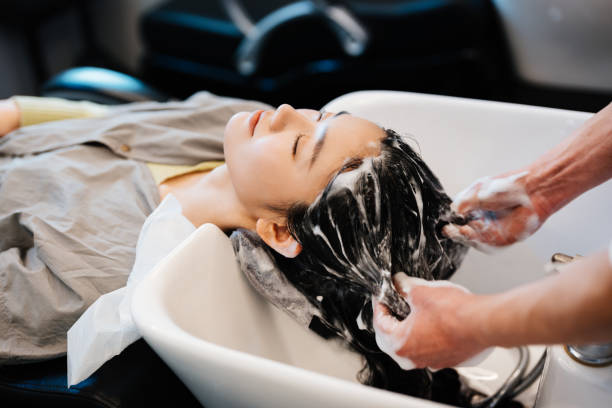
Perhaps the most important step in the entire process of “PRP hair loss treatment” is choosing a reputable clinic and a truly skilled dermatologist. This directly impacts your safety and, of course, the results of your treatment. Think about it, you’re investing in your health and beauty, so you need to be careful that this investment is made in the right place.
First and foremost, look at the “doctor’s expertise and experience.” Is the doctor in question truly a dermatologist? Do they have sufficient experience in performing PRP? Have they completed relevant training courses for this treatment? A dermatologist thoroughly understands the anatomy of the skin and hair and knows how to perform injections with precision and high safety. For example, at Kian Derm, our doctors have years of experience in this field, and that itself is highly valuable.
Second, the “clinic environment and equipment.” Is the clinic sterile and clean? Does it use modern and up-to-date equipment? Blood collection tubes and PRP kits must be disposable and standard to bring the risk of infection to zero. A good clinic like Kian Derm always pays attention to these small but vital details.
Third, “initial consultation and transparency.” A good doctor should honestly tell you everything; from the pros and cons to the costs and realistic expectations. You should never feel that you haven’t been given enough information or that you’re under pressure. This consultation is an opportunity for you to ask all your questions and build trust.
Fourth, “geographical location and accessibility.” Well, having the clinic close to you and making commuting easy is a plus for following up on treatment sessions. Specialized dermatology clinics located in central areas of cities are usually good options.
Fifth, “checking previous patient reviews.” Nowadays, with the internet, you can read reviews and experiences of previous patients about that clinic or doctor. Of course, you should always look at these reviews with caution, but they can give you a general idea. Remember, the right choice is the foundation of a successful outcome.
🤝 Combining PRP with Other Treatments: Enhanced Efficacy
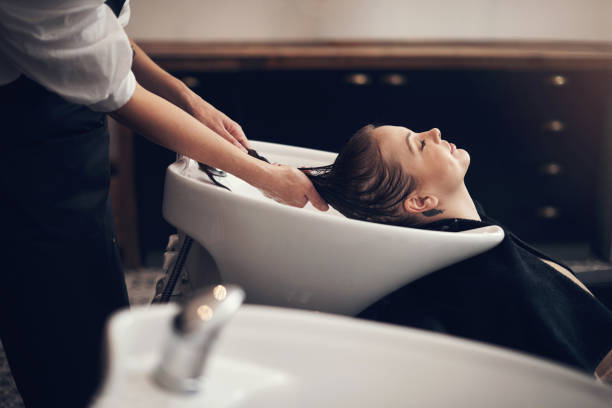
Sometimes, PRP hair loss treatment works wonderfully on its own, but for some, combining it with other methods can significantly enhance the results. Think of it like assembling a team of specialists to work on a common goal. Each of these treatments approaches the hair loss problem from a different angle and complements each other.
One of the most common combinations is using PRP along with “Minoxidil” and “Finasteride” (for men). Minoxidil is a topical medication that helps improve blood flow to the scalp and prolong the hair growth phase. Finasteride is an oral medication that works by inhibiting the hormone dihydrotestosterone (DHT), which is the primary cause of hereditary hair loss in men. When we combine PRP with these medications, it’s like giving an extra boost to the hair follicles to grow better and faster.
Another combination is “Mesotherapy” with PRP. In mesotherapy, cocktails of essential vitamins, minerals, and amino acids are injected into the scalp in tiny amounts. If these cocktails are combined with PRP, the follicles are both nourished and receive additional growth stimulation from the PRP’s growth factors. Many clinics, like Kian Derm, offer these options to enhance treatment effectiveness.
“Microneedling” is also an excellent option to combine with PRP. In microneedling, a pen-like device with fine needles creates microscopic punctures on the scalp. These punctures do two important things: first, they stimulate collagen production, and second, they open pathways for better penetration of PRP into the deeper layers of the skin. Imagine a lot of open channels allowing PRP to reach the roots more easily.
Even for those who have undergone hair transplantation, PRP can be an excellent adjunctive treatment. Injecting PRP after hair transplant helps improve the survival and growth of transplanted follicles and accelerates the healing process. This essentially acts as a booster for newly transplanted hair. In short, a comprehensive and combined approach usually yields more sustainable and satisfying results.
Longing for a smoother, softer complexion without harsh chemicals? kianderm offers gentle yet effective microdermabrasion and other aesthetic treatments for radiant skin.
✅ Non-invasive exfoliation for immediate glow and freshness
✅ Improved skin texture and reduced appearance of pores
✅ Customized treatments for a refreshed and revitalized appearance
Polish your beauty at kianderm!
🌱 Maintaining Results and Looking to the Future: Long-Term Care
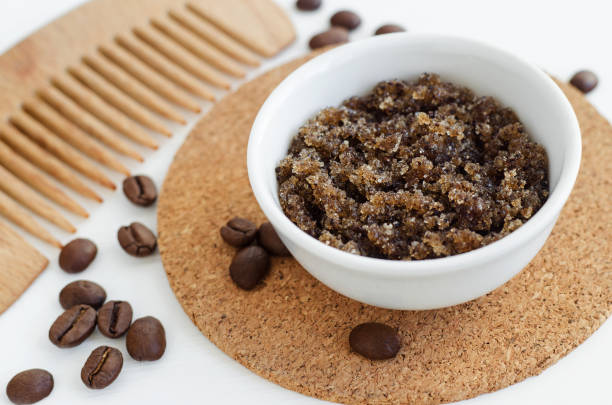
Okay, you’ve undergone “PRP hair loss treatment,” your hair has revitalized, and you’re happy. But does the story end here? Not really; this is just the beginning of a longer journey: the journey of maintaining results and caring for your hair long-term. PRP is not a permanent, 100% solution where no further action is needed; it’s more like a strong start that needs to be sustained.
The most important tip for maintaining results is “booster or maintenance treatment sessions.” Just as a plant needs continuous watering, hair follicles may need re-stimulation to maintain their activity and growth. Your doctor at Kian Derm clinic will provide you with a plan for these booster sessions based on your hair condition. Typically, a PRP session might be needed once every 6 months or once a year to maintain the results.
“A healthy lifestyle” also plays a key role. If you recall, we mentioned that hair loss can have many causes. So, if we want to preserve our hair, we must pay attention to our nutrition. A diet rich in protein, vitamins (especially B, D, and E vitamins), and minerals like iron and zinc is vital for hair health. Adequate water intake and avoiding fast food and excessive sweets also indirectly help.
“Stress management”! Yes, I know, it’s easier said than done. But stress is truly one of the silent killers of hair. Try to find relaxation methods, such as meditation, yoga, exercise, or even listening to music. The less stress you have, the more balanced your body’s hormones will function, and your hair will experience fewer problems.
Don’t forget “daily hair care.” Using appropriate shampoos and conditioners, avoiding harsh washing, or excessive heat use (like hot blow-dryers and hair straighteners) can help maintain hair health. Consulting with your doctor about suitable hair care products for your hair is also a good idea.
In summary, this is a long journey, not a destination. With regular care and a realistic outlook, you can enjoy the results of PRP for a long time and have healthy, vibrant hair. Remember, Kian Derm is always with you on this path.
| Question | Answer |
|---|---|
| What is PRP and how does it help treat hair loss? | PRP, or Platelet-Rich Plasma, is prepared from your own blood. This plasma is rich in growth factors which, when injected into the scalp, stimulate hair follicles, increase the growth of new hair, and strengthen thinning hair. |
| Is PRP treatment painful? | Before injection, the targeted area is numbed with a topical anesthetic to ensure minimal discomfort. Usually, only a mild burning sensation or pressure is tolerable. |
| How long does it take to see PRP results? | Typically, the first signs of reduced hair loss or increased thickness are visible after 2 to 3 months and completion of a few treatment sessions. More complete results usually appear 6 to 12 months after the initial course of treatment. |
| How many PRP sessions are needed for hair loss? | The number of sessions depends on the severity of hair loss and your body’s response to treatment, but often 3 to 6 sessions at 4 to 6-week intervals are initially recommended. Then, for maintenance, booster sessions are needed every 6 to 12 months. |
| Who are not suitable candidates for PRP treatment? | Individuals with certain blood disorders, active scalp infections, active cancer, or pregnant and breastfeeding women are usually not suitable candidates. It may also have less efficacy for very advanced hair loss where follicles are completely destroyed. |
| Does PRP have side effects? | Side effects are typically mild and temporary, including redness, swelling, sensitivity, or mild bruising at the injection site, which resolve within a few days. The risk of infection, when hygiene protocols are followed by a specialist, is very rare. |
| What care is needed after a PRP session? | It is usually recommended to avoid washing hair for 24 hours, refrain from strenuous activities and intense sun exposure, and carefully follow the doctor’s instructions. |
| Can PRP be combined with other hair loss treatments? | Yes, PRP can be effectively combined with treatments such as Minoxidil, Finasteride, Mesotherapy, and Microneedling to achieve better results. It also aids in the growth of transplanted follicles after hair transplantation. |
| How do I choose a suitable clinic and specialist for PRP? | Pay attention to the doctor’s expertise and experience (preferably a dermatologist), the sterility of the clinic environment and equipment, transparency during consultation, and reviews from previous patients. A clinic like Kian Derm with experienced doctors and a standard environment is a suitable choice. |
| Are PRP results permanent? | No, PRP results are not permanent, and to maintain them, booster sessions (usually once or twice a year) and adherence to a healthy lifestyle and daily hair care are necessary. |
And other services provided by Kian Derm Clinic include
• Shave biopsy for superficial lesions
• Punch biopsy for deeper lesions
• Incisional biopsy for large lesions
• Fungal culture for nail/skin
• Bacterial culture for skin infections
And dozens of other services in the fields of skin, beauty, and medical treatments
Skin | Hair | Beauty | Nails
Is your business data a mess? kianderm provides comprehensive business information management services to keep your data organized and accessible. ✅ Centralized data solutions.
Phone: +1 (236) 551-2282
Email: info@kianderm.ca
Address: 1836 Lonsdale Ave, North Vancouver, BC V7M 2J9, Canada